Nikoleta Sekulovic
On Clarity Woven Through Time
"Do not give in to fear or despair. The art world is unpredictable, and success is never guaranteed. What matters most is the act of creating."
Introduction
Nikoleta Sekulovic trained as an actress, performed for years, and built her identity around an art entirely removed from painting. When she finally redirected everything toward a canvas, it was not a return to something she had abandoned. It was something closer to an arrival.
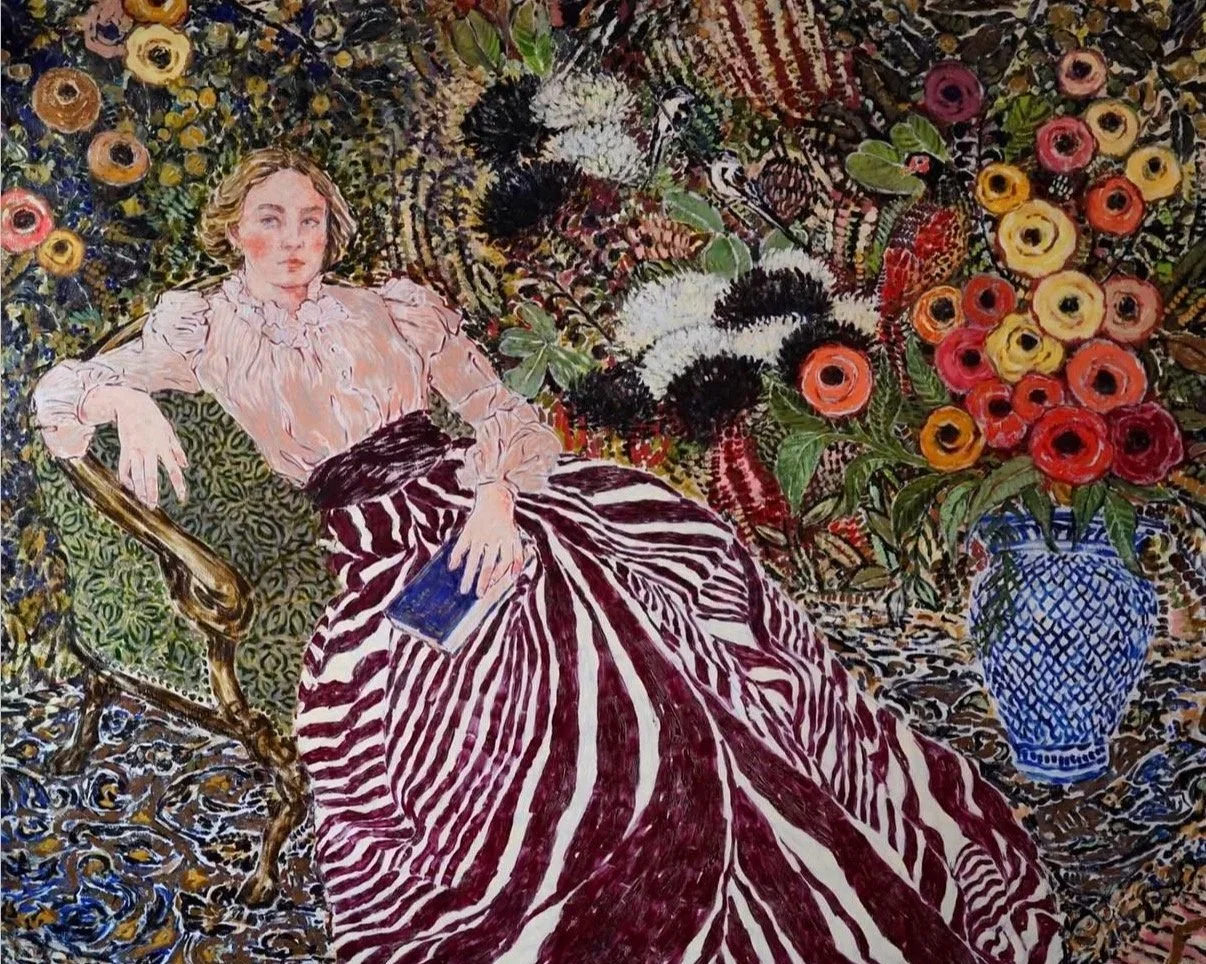
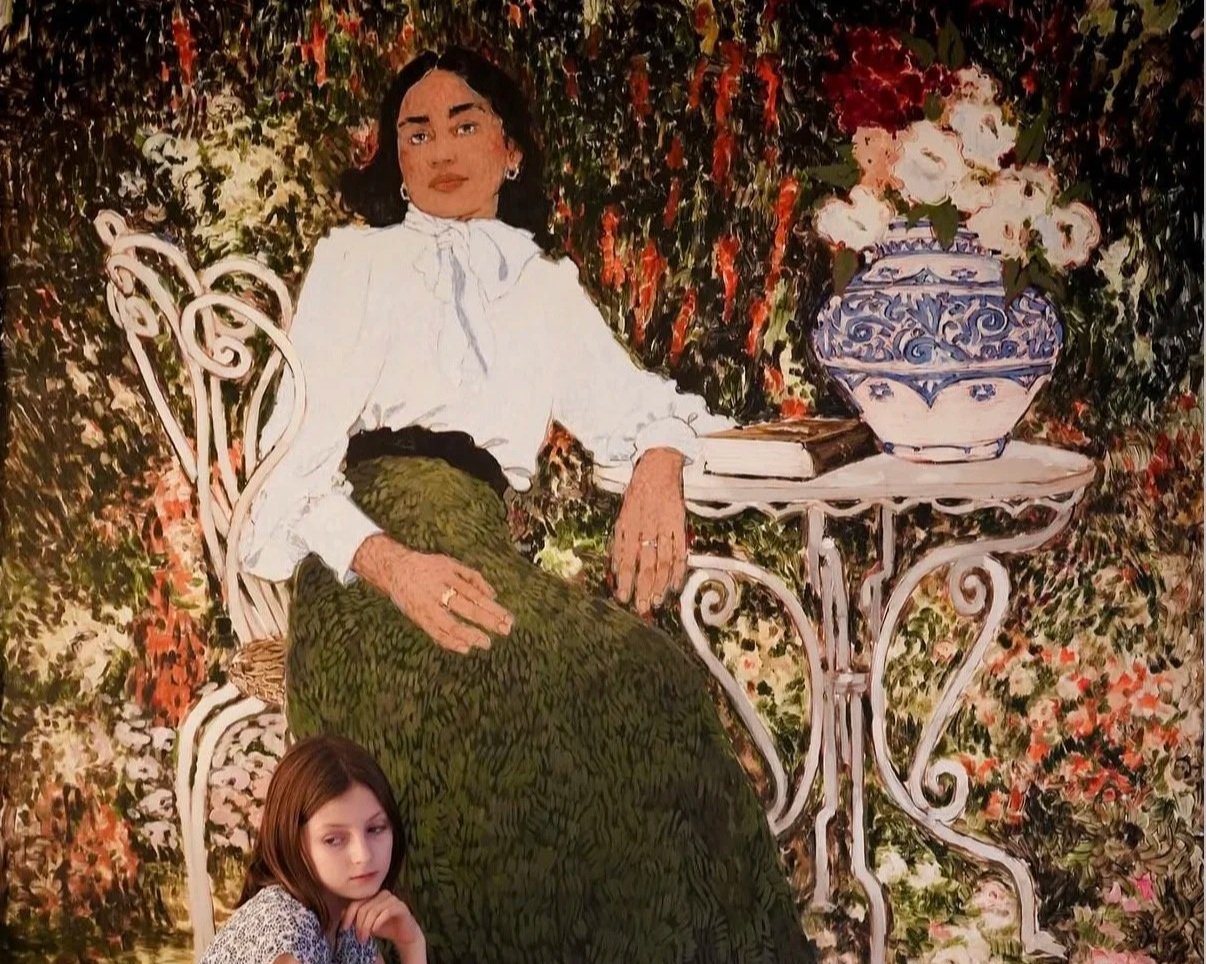
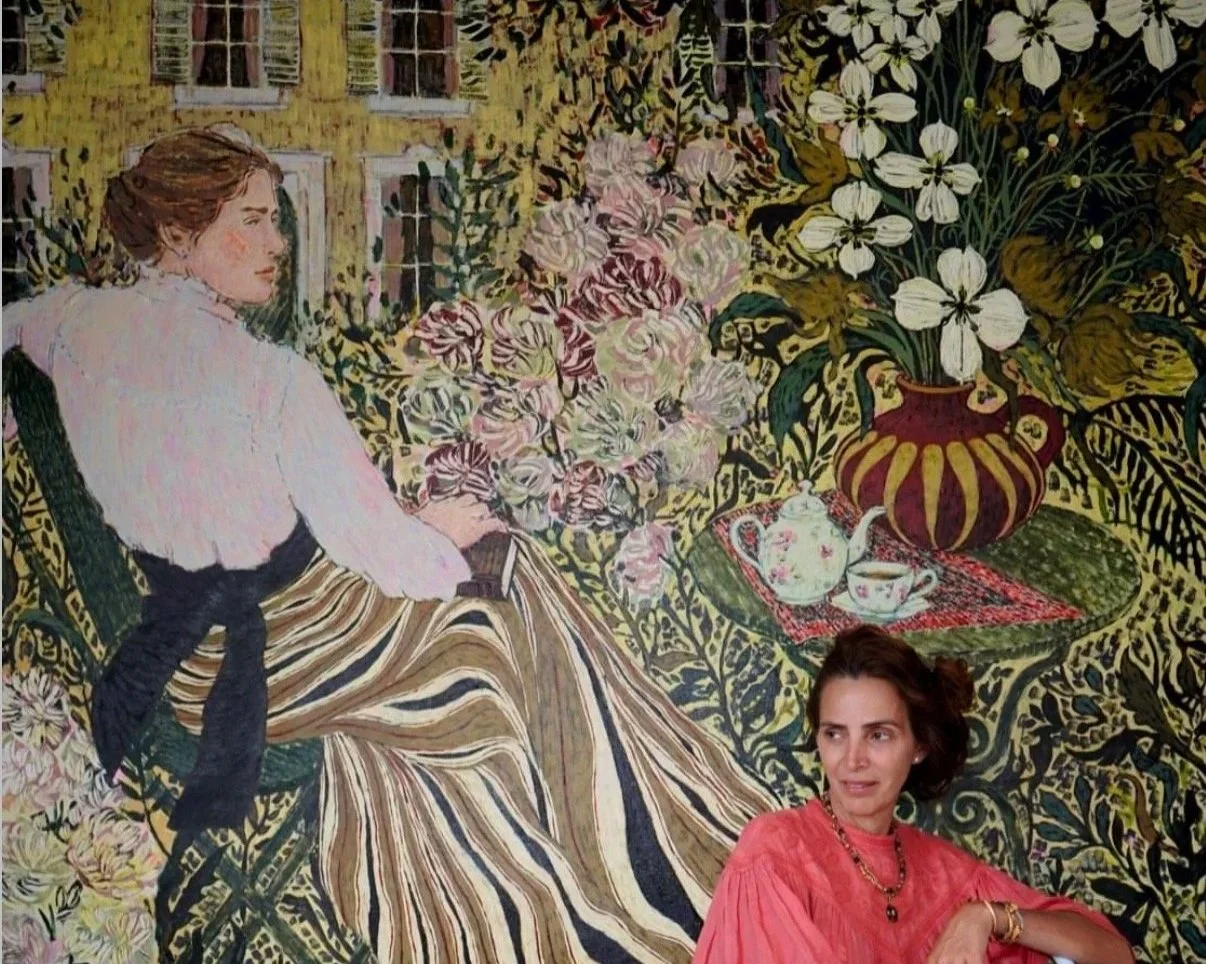
Her paintings reflect that. The colors captivate immediately, offering a lens through odalisque portraiture that belongs in a museum rather than a gallery. Her work presents the female form free from the weight of external expectation, catching it in a moment of quiet authenticity rather than a conventional aperture.
Origins
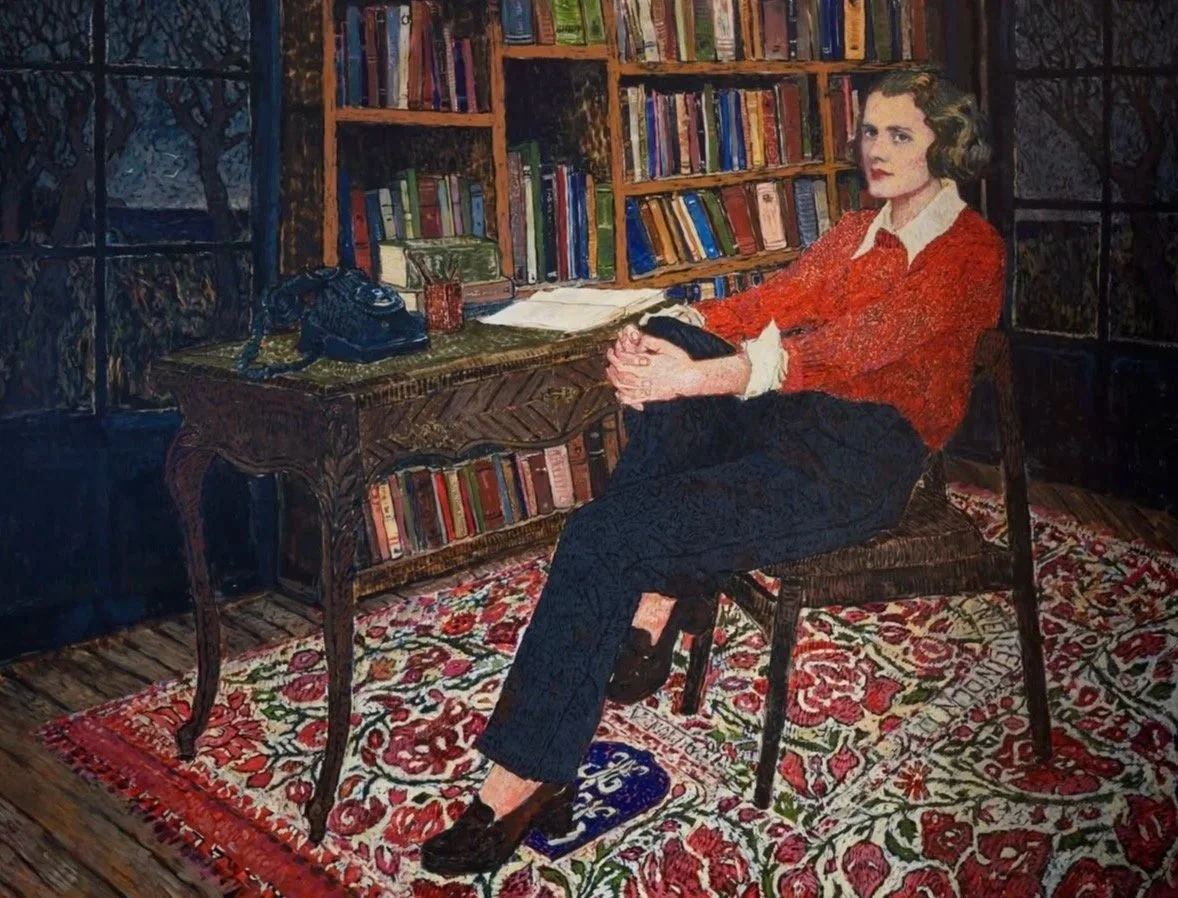
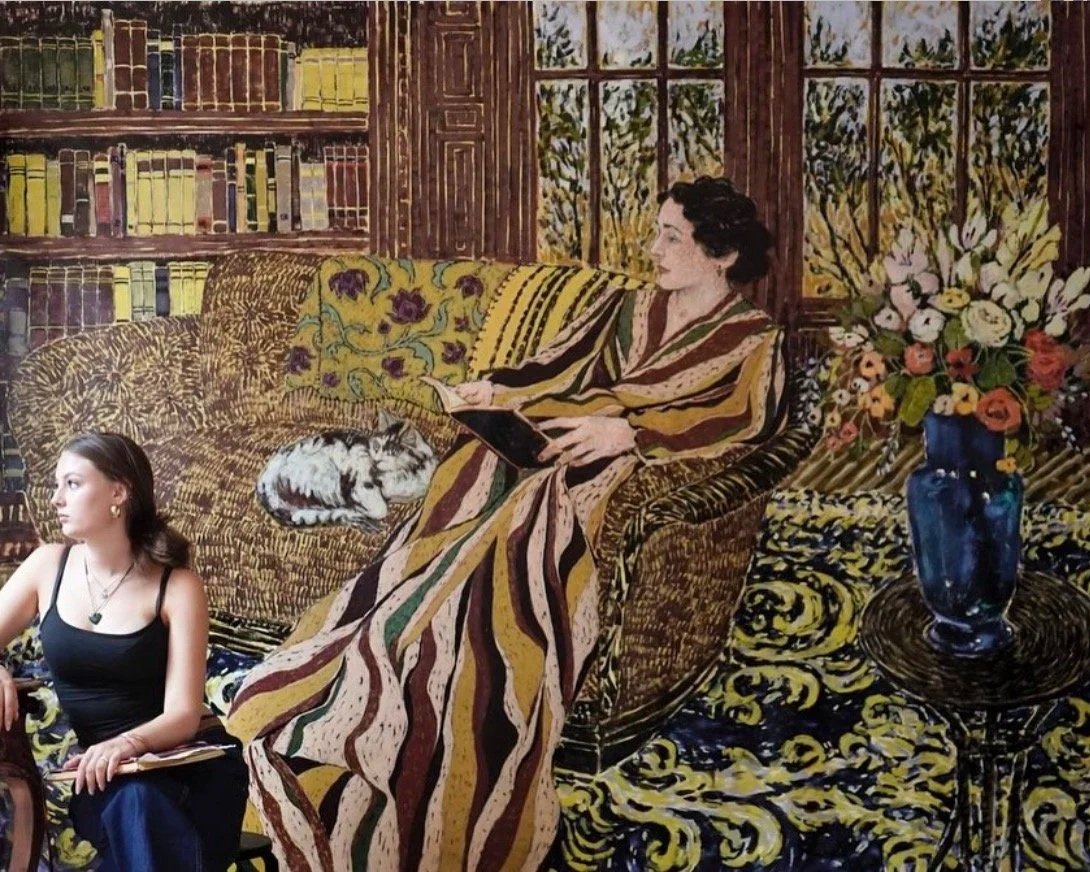
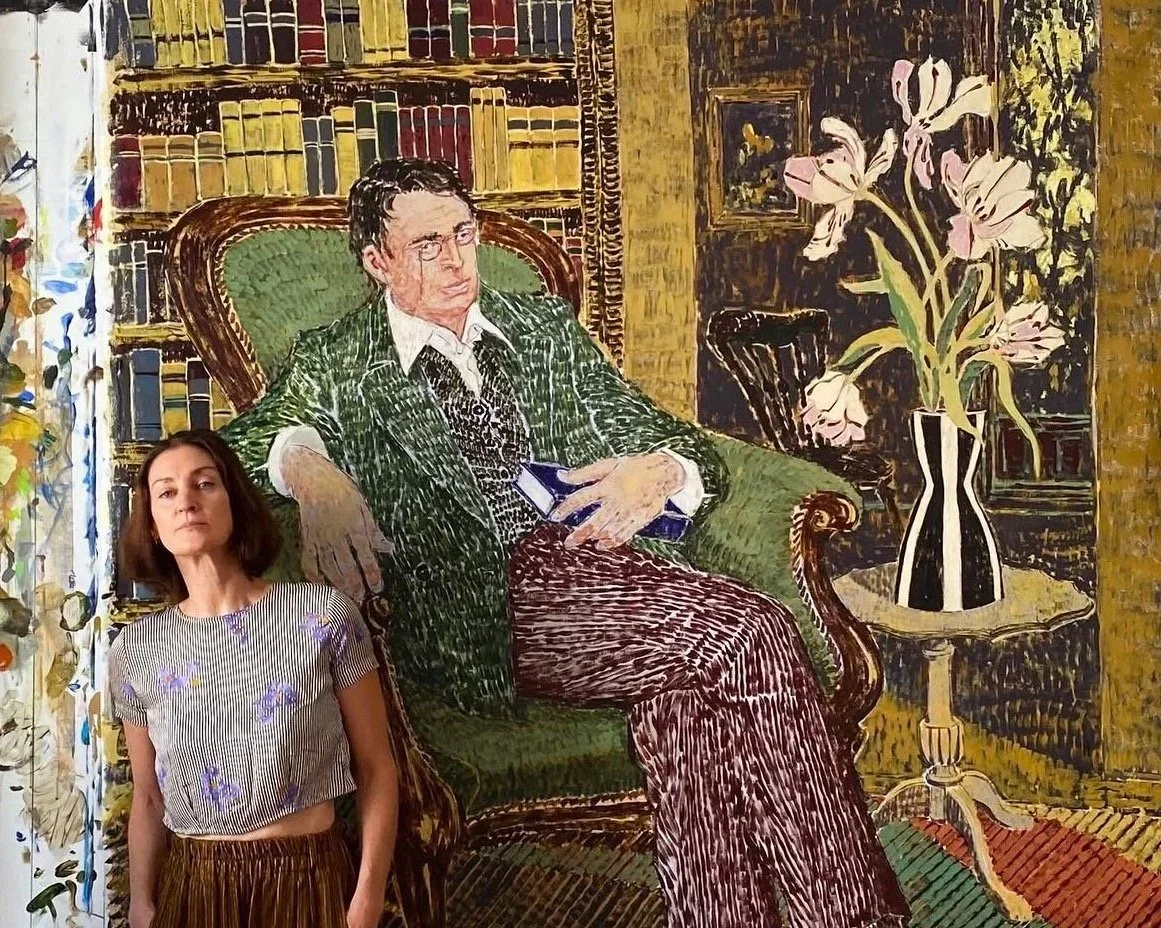
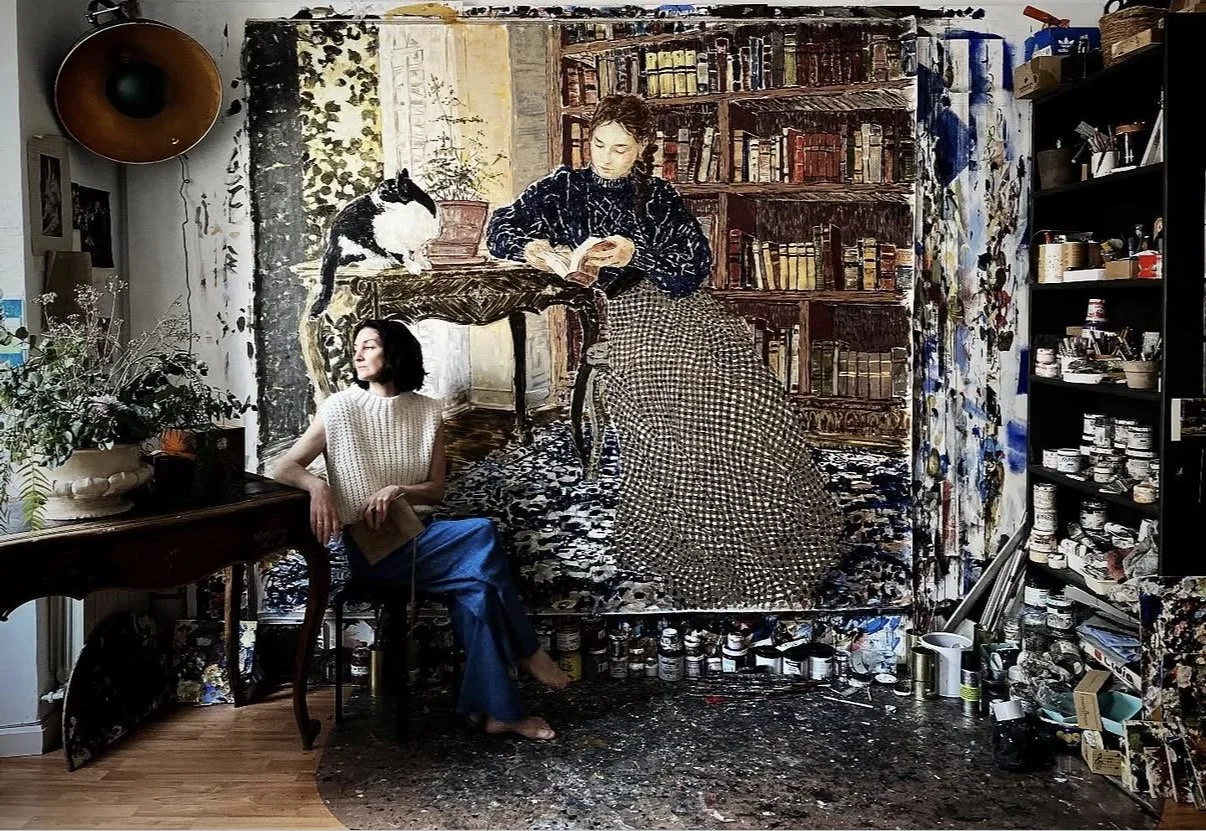
Nikoleta was born in Rome to a Serbian father and a German mother, and grew up in a nautical household. Her father was a ship captain. The house was filled with antique furniture, maritime objects, classical portraits, and old paintings collected over a lifetime. The atmosphere was deeply traditional, almost Edwardian, and it never left her. This atmosphere is reflected in her paintings through the interiors, the greyhounds, the layered textiles, and the sense that her figures exist slightly outside of modern time.
She had been painting long before she committed to it professionally. For most of her adult life, it was a hobby, something she returned to between other things, never quite the priority. It took her, by her own account, around forty years to truly identify her style. Rather than treating that as a cautionary note, she offers it as something closer to reassurance. Clarity takes time. Forcing it earlier does not make it truer.
Her transformation unfolded organically, and it unfolded around her daughters.
"My true transformation as an artist came with the birth of my daughters," she told us. "When my first daughter was born, the seed of an idea was planted. With my second daughter, the idea took shape."
She stepped away from acting and devoted herself fully to painting. The work followed. "Everything changed when I decided to devote myself fully to it. That is when my work began to evolve and gain depth and potential."
What her words make clear is that talent alone is not the deciding factor. She had the talent long before the transformation. What moved things forward was the decision to show up for it entirely, without the exit route of treating it as secondary.
The Work
Her earliest paintings were nude figures set against simple geometric forms, muted tones, and empty space. The Mother and Muse Collection grew from this period, from an instinct to paint what was immediately close to her. She asked friends who were also mothers to pose, and the series took shape from there.
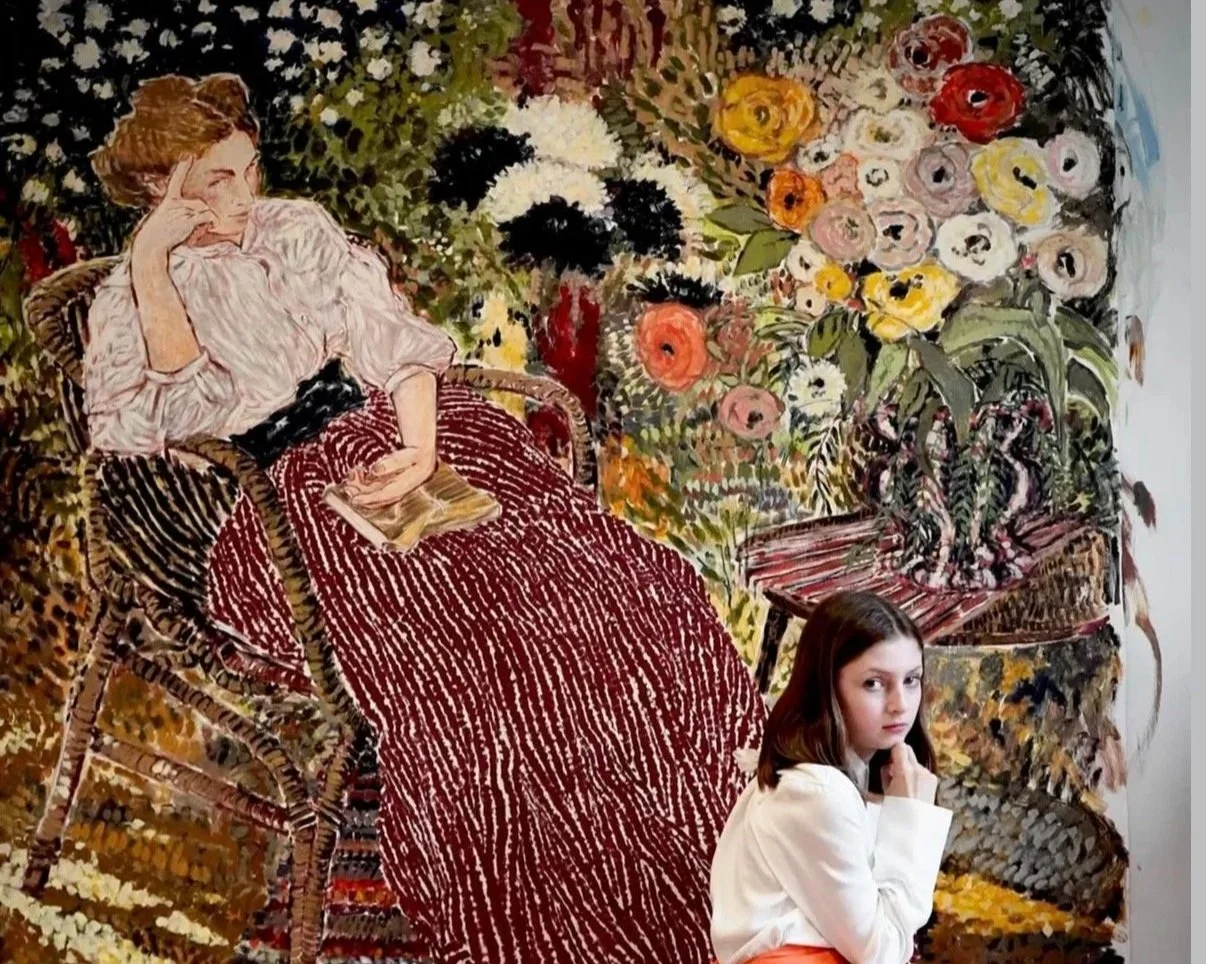
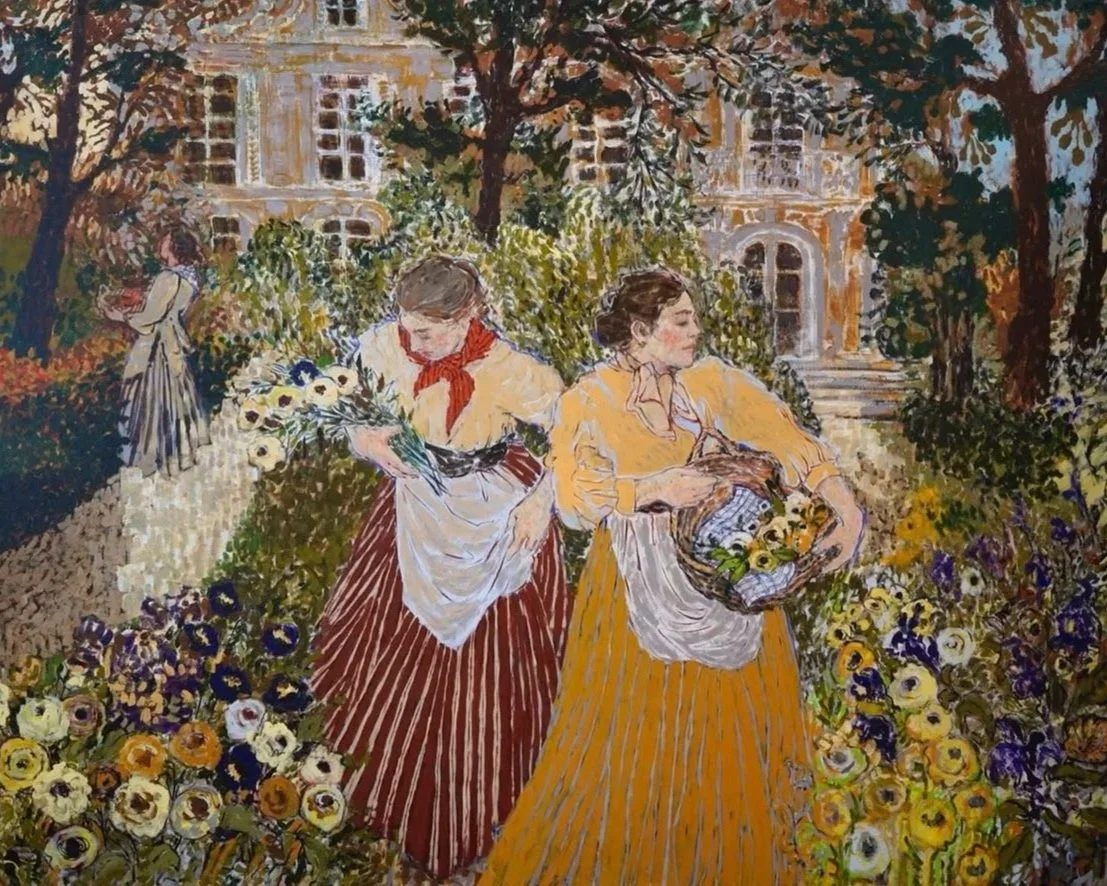
Over time, the figures became clothed and took on a more historical character. Interiors filled in. Greyhounds appeared, then cats, more motifs of her childhood. In recent years, flowers have moved to the center of her compositions, woven into fabrics, backgrounds, carpets, and vases. They are not decorative afterthoughts. "Flowers now play an important role in shaping the atmosphere of my paintings and the conveying of emotion," she said.
The thread running through all of it is geometry. She keeps returning to these not as aesthetic decisions but as something more instinctive. "I am drawn to the human soul and emotional expression," she explained, "and pattern and geometry help me transmit what the eye cannot see, but can be felt intuitively."
Working Backwards
Her process defies the intuitive. Rather than building toward something, she already holds the vision and only looks to unearth it. The feeling exists before the understanding does.
"I work from Z to A, backwards," she said. "I am surrounded by creative ideas, floating around me, and I breathe them in. Sometimes these ideas are so eager to transform into a painting that they manifest themselves in my mind, but in code. So I need to uncode them, like dialing an old radio and finding the right frequency."
Clarity, for Nikoleta, does not have to come first. She begins with something not yet fully understood and works toward understanding it, patient with the uncoding, trusting that moving forward even imperfectly is always more useful than waiting for an idea to arrive whole. A dead end is still movement, and movement is still worth more than stillness.
It is a practice built entirely on patience, and one she has learned to trust. Her advice is not to mirror her method but to find your own and follow it with equal conviction. "The important thing is to discover what works for you."
Discipline is what holds that intuition in place. She keeps a daily routine, weekends included, and does not treat inspiration as a prerequisite. "Creative ideas need time to grow, like seeds. You cannot force them." When she hits a wall, she changes direction entirely, traveling, visiting museums, shifting her surroundings, and returns when she feels ready.
The Unglamorous Parts
Nikoleta speaks honestly about the aspects of being an artist that tend to get left out of the romanticized version. Getting stuck in a painting and being unable to resolve what is not working. Indicating how external validation subtly shapes confidence in ways you would rather it did not.
"When work sells, it brings reassurance; when it doesn't, doubt creeps in," she admitted. "I try to remind myself that the value of my work should not depend on that, even if emotionally it still has an impact."
There is also the reality of having a family alongside painting, the interruptions, the demands, and the time taken away. She names it without complaint, more as a truth she is at peace with. "Everyday responsibilities and unexpected events can interrupt long stretches of creative focus, which can be frustrating when all you want is to return to painting."
What keeps her going through all of it is a clarity about what actually matters. "Do not give in to fear or despair. The art world is unpredictable, and success is never guaranteed. What matters most is the act of creating. Fear and constant anxiety can suffocate creativity, while curiosity and persistence nurture it."
Building With Clarity
Nikoleta did not always know she wanted to join the visual art world. Her experience at school discouraged her early on. "I felt pressured to follow methods and styles that didn't suit me." So she pursued acting instead, and returned to painting years later on her own terms, with far more certainty about what she actually wanted to make.
When she finally committed to presenting her work publicly, she spent a full year building a body of work before showing it to anyone. She organized her own exhibition and used crowdfunding to finance the materials. A gallery followed, and then more opportunities from there.
Her advice to artists seeking representation is to stay connected: develop a strong and cohesive body of work, find the right fit, and demonstrate that you can consistently produce and evolve. And more broadly, remain humble. "No artist exists in isolation. We rely on galleries, clients, family, and the wider world. Success should never disconnect you from that reality."
Atmosphere
When we asked Nikoleta what she wanted her work to convey, her answer was simple: atmosphere. The answer is more complex than it seems.
"A painting should create an atmosphere, feeding both the soul and the mind. Rather than simply drawing the viewer in, I want my work to extend outward into the space, like a perfume that slowly fills a room and settles into every corner. It is less a conversation and more an exchange of emotions, often on an unconscious level."
If she could own any work of art, it would be a Vuillard. Edouard Vuillard, the French Post-Impressionist known for his intimate domestic interiors and layered, pattern-heavy compositions. "I am deeply drawn to the atmosphere in his paintings," she said, "the intimacy, the light, and the emotional depth." The similarity is evident. Both artists understand that a room is never just a room.
She now lives in Madrid, a city that suits her character well. Not just for its museums, though those are remarkable, but for the texture of daily life. "It's a city that feels alive, approachable, and full of character," she said, "and my girls love it here." Perhaps the inspiration of an atmosphere that feeds the soul begins at home.
Conclusion
Nikoleta Sekulovic spent decades living before she committed fully to her work, and that patience is visible in every painting. She did not arrive early, but she arrived certain. Her story makes the case that clarity is worth waiting for, that the years spent elsewhere are not wasted years. Through her paintings, she makes the argument that arriving late with certainty will always outweigh arriving early with no certainty.